Home massage can appeal to people looking for relaxation, general wellness, or short-term relief from certain muscle discomforts. However, massage is not appropriate for every person or every health concern. The type of massage, pressure used, practitioner training, and the individual’s health circumstances all matter when choosing a service.
Scientific evidence on massage varies by condition and technique. The National Center for Complementary and Integrative Health (NCCIH) notes that massage may provide short-term benefits for some types of pain, while evidence for other conditions is limited or inconsistent.
What Is Massage at Home?
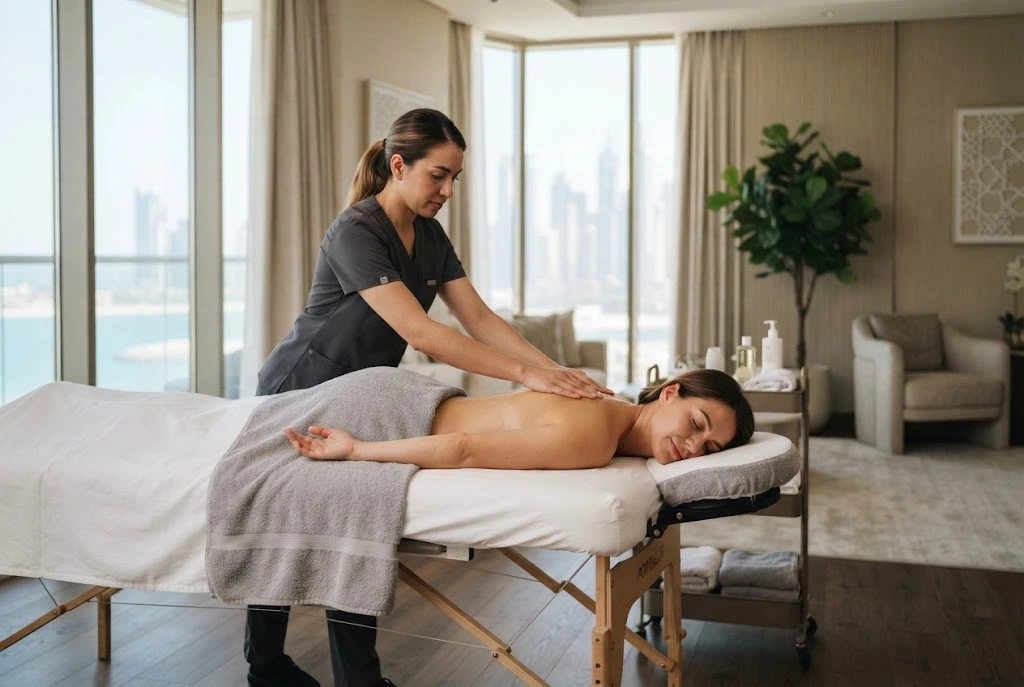
Massage at home is a service where a massage practitioner travels to the customer’s residence instead of the customer visiting a dedicated facility. The practitioner may bring a portable massage table, linens, oils or lotions, and other equipment required for the selected service.
The exact experience depends on the provider. Some services focus primarily on relaxation and wellness, while others may offer massage techniques intended to address particular areas of muscle tension or discomfort.
Because massage services can differ significantly, it is useful to understand what type of session you are booking rather than choosing a service based only on price or proximity.
Why Do People Choose Massage at Home?
The main appeal of a home massage is convenience. Instead of travelling to a facility before and after the appointment, the session takes place at home.
Potential practical advantages include:
- No need to travel to a spa or wellness centre
- Convenient scheduling around work or family commitments
- A familiar and private environment
- Useful access for people who have difficulty travelling
- More flexibility when arranging a session for yourself or family members
- The ability to rest at home immediately after a relaxing session
These are convenience benefits rather than guarantees of a particular health outcome. Massage should not be presented as a replacement for appropriate medical evaluation or treatment.
What Types of Massage May Be Available at Home?
Home massage providers may offer several techniques, although the exact menu differs between businesses and practitioners.
Relaxation or Swedish massage
Swedish or classical massage is one of the commonly recognized massage approaches and generally involves manipulation of soft tissues using techniques designed for relaxation and general wellness.
Deep tissue massage
Deep tissue massage generally involves firmer pressure and more focused work on muscles and soft tissues. Stronger pressure is not automatically better, and it may not be suitable for everyone.
Sports massage
Sports-oriented massage may be marketed toward physically active people. The appropriate technique depends on the person’s activity, physical condition, and reason for seeking massage.
Other specialized techniques
Some providers advertise additional techniques, including traditional or specialty massage approaches. Before booking, ask what training the practitioner has received and what the session actually involves.
What Are the Potential Benefits of Massage?
Massage is commonly used for relaxation and wellness. Research has also examined its potential role in managing certain types of pain and other symptoms.
NCCIH reports that massage may provide short-term benefits for some people with low-back, neck, or shoulder pain, although the strength of evidence varies and long-term benefits are less certain.
Depending on the individual and type of massage, people may seek a session for:
- General relaxation
- Temporary muscle tension relief
- Short-term relief from some forms of discomfort
- Wellness and self-care
- Relaxation after physical activity
- A comfortable way to unwind at home
Massage should not be described as a guaranteed treatment for pain, stress, anxiety, or a medical condition. Evidence differs between conditions, and massage does not address the underlying cause of every symptom.
Is Massage at Home Safe?
Massage appears to have relatively few risks when performed appropriately by a trained practitioner, but it is not completely risk-free. Rare serious complications have been reported, particularly with vigorous forms of massage or in people who may be more vulnerable to injury.
The practitioner should ask about relevant health conditions before starting the session. This information can help determine whether certain techniques or pressure levels should be avoided or modified.
People who are pregnant or who have certain medical conditions may need specific precautions. NCCIH advises people with health conditions to discuss massage safety with their healthcare providers when appropriate.
Who Should Take Extra Care Before Booking?
Some people should seek professional guidance before receiving massage, particularly if they have a condition that could make vigorous pressure or certain techniques inappropriate.
Extra caution may be relevant for people with:
- Bleeding disorders
- Conditions affecting blood clotting
- Recent injuries or surgery
- Open wounds or damaged skin
- Significant unexplained pain
- Certain neurological or musculoskeletal conditions
- Pregnancy or pregnancy-related health considerations
- Other medical conditions for which massage safety is uncertain
NCCIH specifically notes that forceful or deep tissue massage may be inappropriate for some people with bleeding disorders, low platelet counts, or those taking anticoagulant medicines. Massage should also not be performed over wounds or potentially weak areas of skin.
If you are unsure whether massage is appropriate for you, ask a qualified healthcare professional before booking.
How to Find Massage at Home Near Me
When searching for massage at home near me, location is only one factor to consider. A nearby provider may not necessarily be the right choice for your needs.
Before booking, check:
- Who will provide the massage
- The practitioner’s relevant training and experience
- Which massage techniques are offered
- Whether home visits are available in your area
- How long the session lasts
- What equipment the practitioner brings
- The total price, including travel or call-out fees
- The provider’s cancellation policy
- How customer privacy and professional boundaries are handled
NCCIH also recommends asking about a massage practitioner’s training, experience, credentials, expected number of treatments, cost, and insurance coverage where relevant.
What About “مساج دبي رخيص” Searches?
People searching for مساج دبي رخيص are often looking for affordable massage options in Dubai. Price can be an important consideration, but the cheapest advertised service is not necessarily the most suitable option.
Instead of comparing the headline price alone, compare what is included in the session. A low advertised rate may apply only to a particular duration, location, technique, or introductory offer. Additional travel charges, longer sessions, specialty techniques, or other services may change the final price.
For a responsible booking decision, consider the practitioner’s training, service description, hygiene practices, privacy, total cost, and customer policies alongside price.
How Much Does a Home Massage Cost?
There is no single standard price for massage at home in Dubai. Prices can vary according to the provider, massage technique, session length, location, time of day, practitioner experience, and additional services.
Common factors that can affect the quoted price include:
- 30-, 60-, 90-, or longer sessions
- Type of massage requested
- Distance travelled by the practitioner
- Peak-hour, weekend, or late-night appointments
- Specialized massage techniques
- Couples or multiple-person bookings
- Promotional or membership pricing
Ask for the complete price before confirming the appointment and clarify whether transportation, equipment, taxes, or other charges are included.
What to Expect During a Home Massage
Before the session starts, the practitioner should discuss the type of massage, pressure preferences, areas that should be avoided, and relevant health information.
You should be able to communicate if the pressure is uncomfortable or if a technique causes pain. A professional session should respect your comfort, privacy, personal boundaries, and agreed treatment areas.
The practitioner may set up a portable massage table or another appropriate arrangement depending on the service. The environment should allow enough space for the practitioner to work safely and comfortably.
How to Prepare Your Home for a Massage Appointment
A few simple preparations can make a home session easier.
- Clear enough space for the massage equipment.
- Keep the room at a comfortable temperature.
- Provide adequate lighting.
- Keep pets away if they could interfere with the session.
- Have any relevant medical information available.
- Tell the practitioner about areas of pain or injury before the massage begins.
- Confirm the session duration and agreed price before starting.
If you have significant or unexplained pain, explain this before the session rather than assuming massage is an appropriate solution.
Massage for Muscle Pain: What to Know
Some people seek massage because of muscle or back discomfort. Research suggests massage may provide short-term improvement for certain types of low-back pain, but the evidence is not strong enough to treat massage as a guaranteed solution.
Persistent, severe, worsening, or unexplained pain may require medical assessment. Massage should not be used to delay evaluation of a potentially significant medical problem.
If pain is accompanied by concerning symptoms such as major weakness, loss of sensation, significant injury, difficulty breathing, chest pain, or other potentially serious symptoms, seek appropriate medical attention rather than relying on massage.
Questions to Ask Before Booking
A short conversation with the provider can help prevent misunderstandings. Consider asking:
- What type of massage is recommended for my stated goal?
- How long is the session?
- What is the complete price?
- Are there additional home-visit fees?
- Who will perform the massage?
- What training or credentials does the practitioner have?
- Do you modify techniques for health conditions or injuries?
- What equipment is provided?
- What is the cancellation policy?
- Can I request a different pressure level during the session?
Massage at Home vs. Visiting a Spa
The main difference is where the service takes place. A spa or wellness centre provides a dedicated environment with its own facilities, while a home service brings the practitioner to the customer’s residence.
Home massage can reduce travel and provide greater privacy, while a dedicated facility may offer a broader range of amenities and treatment rooms. The appropriate choice depends on personal preferences, accessibility, budget, and the type of service required.
When Massage Should Not Replace Medical Care
Massage is generally considered a complementary wellness approach rather than a substitute for diagnosis or medical treatment. NCCIH specifically advises against using massage therapy to postpone seeing a healthcare provider about a medical problem.
If you have persistent symptoms, significant pain, a recent serious injury, unexplained physical changes, or another health concern, seek appropriate medical evaluation. A healthcare professional can determine whether massage is suitable as part of your overall care.
Final Thoughts
Searching for massage at home near me can be a practical way to access relaxation and wellness services without travelling to a spa or clinic. Home sessions may also be convenient for people who prefer a familiar environment or have difficulty travelling.
However, price and convenience should not be the only considerations. Check the practitioner’s training, understand the massage technique being offered, confirm the total cost, and disclose relevant health conditions before the session.
Massage may provide short-term benefits for some types of pain and can be useful for relaxation, but evidence varies by condition and technique. Choosing an appropriately trained practitioner and seeking medical advice when necessary can help make a home massage experience safer and more appropriate.
